
WHOLESALE FENCE MATERIALS
High-Tensile Wire
High-tensile wire for farm, ranch, livestock, agricultural, contractor, and large-property fencing projects. Source fence wire by gauge, coating, roll length, tensile specification, quantity, and project requirements. Orders can be planned with steel T-posts, insulators, brace materials, gates, and other compatible fencing products.
Request Bulk Pricing Explore all fence materials →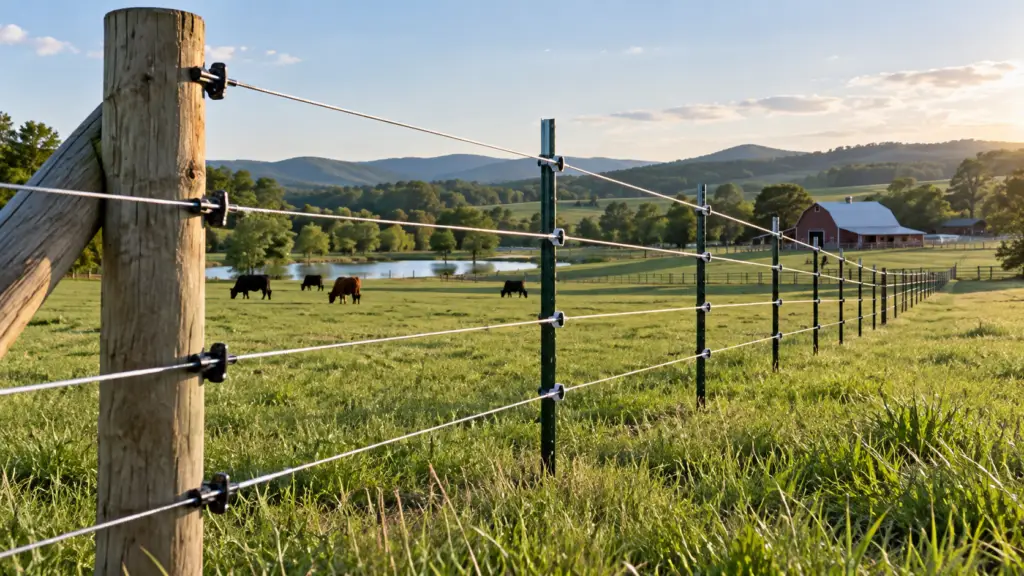
PLAN THE COMPLETE FENCE
Plan your bulk order
High-tensile wire is used for livestock containment, pasture divisions, agricultural boundaries, electric fence systems, long rural fence runs, and other projects where strong wire and controlled tension are important parts of the fence design. The right wire depends on more than roll count alone. Wire gauge, tensile rating, coating, strand count, fence height, post spacing, bracing, tension, and exposure conditions should be considered together before material is ordered.
For larger projects, high-tensile wire can be planned with painted or galvanized T-posts, insulators, brace posts, gates, barbed wire, woven wire, and related fence hardware. Coordinating these materials as one project package can simplify quantity planning, freight, and receiving.
High-Tensile Wire Options
Standard High-Tensile Wire
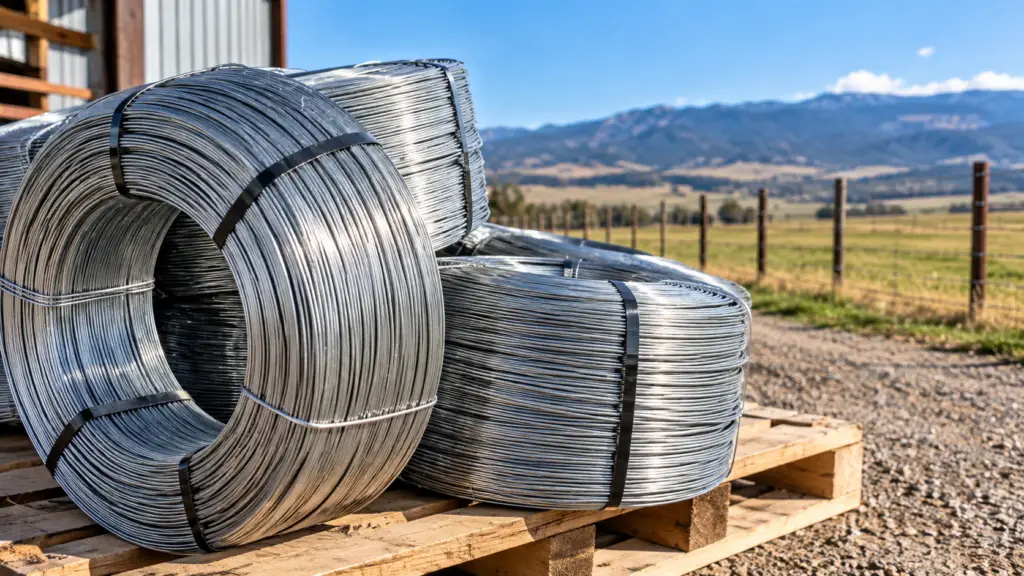
Standard high-tensile wire is used for farm, ranch, pasture, perimeter, and agricultural fencing where long runs and consistent wire tension are part of the fence plan. Product selection should account for wire gauge, tensile rating, coating, roll length, strand count, post spacing, brace design, terrain, and expected livestock pressure.
For bulk orders, confirm the required wire specification and total fence footage so roll quantities can be matched to the project rather than estimated from a generic package size.
High-Tensile Electric Fence Wire
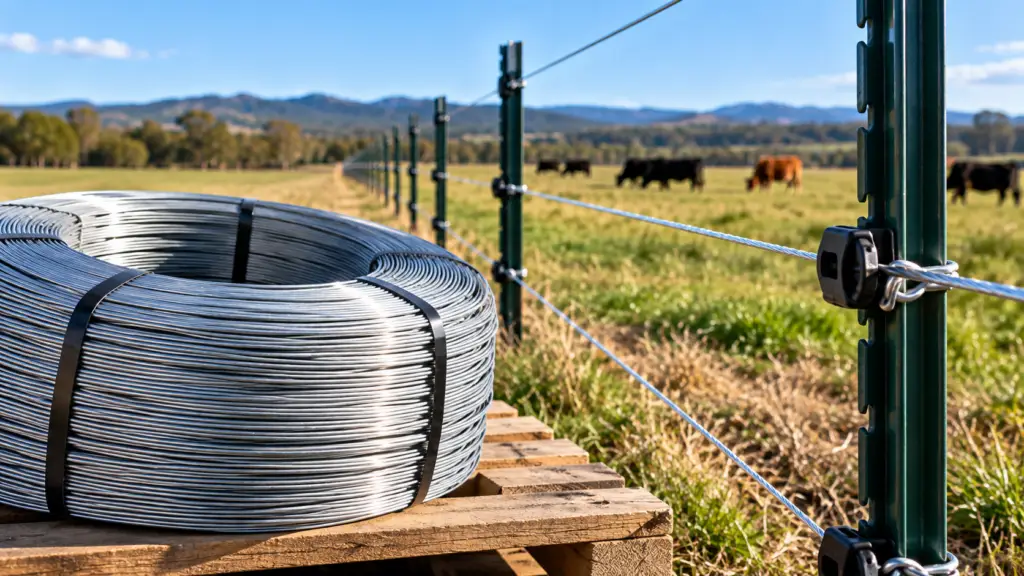
High-tensile electric fence wire is commonly used for rotational grazing, livestock control, pasture subdivisions, and perimeter systems designed around energized conductors. Wire gauge, coating, insulator compatibility, energizer design, grounding, post spacing, and brace assemblies should be matched to the planned electric fence system.
When electric fencing is part of the project, insulated attachment points and compatible hardware are especially important because energized conductors should be kept isolated from steel posts and other conductive components.
Bulk & Project High-Tensile Wire Orders
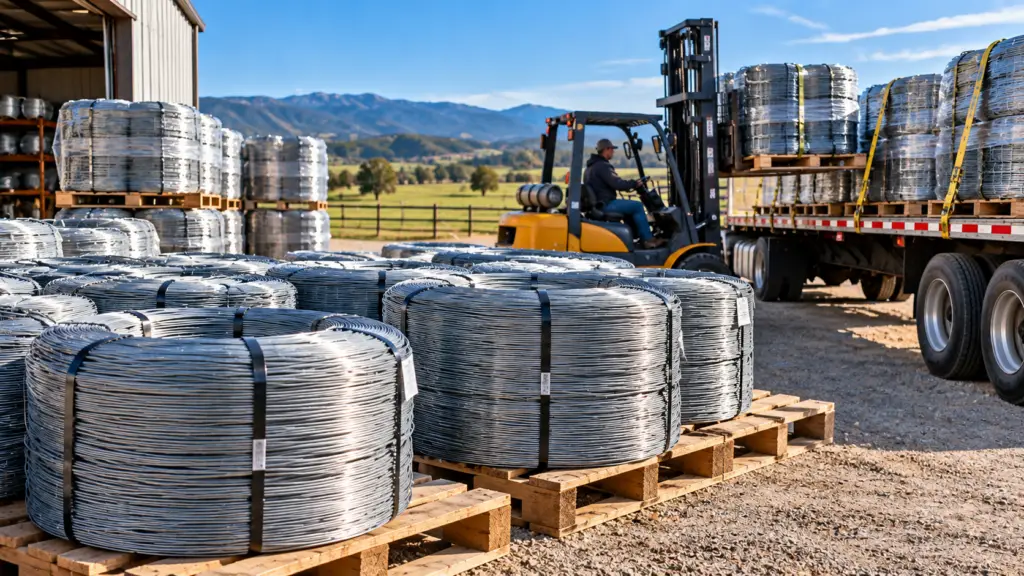
Plan multi-roll, pallet, and project-scale high-tensile wire orders for ranches, farms, contractors, agricultural operations, dealers, and large acreage projects. Roll quantities, total shipment weight, companion materials, freight, site access, and unloading requirements can be reviewed together so the quote reflects the full material scope.
Large fence projects may also combine different wire types, T-post specifications, insulators, brace materials, and gates. Provide the project footage and required specifications so compatible items can be organized around one purchasing plan.
Why Plan High-Tensile Wire by Project?
High-tensile wire performs as part of a complete fence system rather than as an isolated product. Planning the wire, T-posts, brace assemblies, insulators, gates, tension requirements, and delivery quantities together helps buyers build a more consistent material package before installation.
Project-based planning is especially useful for long fence runs because wire length, post spacing, terrain changes, gate locations, corner assemblies, and strand count can all affect the final material quantities.
- Matches high-tensile wire quantity to total fence footage and strand count
- Helps compare wire gauge, tensile specification, coating, and roll length
- Supports coordinated planning for T-posts, insulators, and brace materials
- Makes bulk packaging and freight requirements easier to review
- Useful for cattle, pasture, rotational grazing, and large-acreage fencing
- Supports contractors and agricultural operations with longer fence runs
- Allows gates, brace posts, insulators, and related wire products to be quoted together
- Helps identify delivery access, unloading, and receiving requirements early
Who Uses High-Tensile Wire?
Cattle & Livestock Operations
For livestock containment, perimeter fencing, controlled grazing, and long pasture systems where strong wire and planned tension are important to the fence design.
Pasture & Cross-Fencing
For dividing grazing areas, creating paddocks, organizing livestock movement, and building long internal fence lines across farm and ranch properties.
Electric Fence Systems
For energized livestock and pasture fencing where high-tensile wire is used with compatible insulators, energizers, grounding systems, posts, and brace assemblies.
Farm Perimeters & Fields
For agricultural boundaries, crop-area separation, equipment corridors, field edges, and rural property lines requiring durable wire runs supported by suitable posts and bracing.
Fence Contractors
For contractor installations where consistent wire specifications, post systems, hardware, staged quantities, and coordinated job-site delivery are important to project planning.
Large Acreage & Rural Projects
For boundary, land-management, agricultural, and rural property projects where high-tensile wire quantities need to be planned across substantial fence footage.
High-Tensile Wire Selection Factors
Wire Gauge & Tensile Strength
Wire gauge affects diameter, weight, handling, and compatibility with the planned fence system. Tensile specifications affect how the wire responds to tension and load. Confirm the required gauge and tensile rating or an acceptable range so pricing can be matched to the project rather than substituted blindly.
Coating & Corrosion Protection
Galvanized and other coated high-tensile wire options should be selected according to expected exposure, service environment, and project specification. Humid, coastal, wet, or highly exposed locations may place greater emphasis on corrosion resistance.
Fence Design & Strand Count
The number of wire strands affects total wire quantity, fence height, material cost, and installation planning. Livestock type, fence purpose, terrain, and whether the system is electrified should all be considered when determining strand count and spacing.
T-Posts, Insulators & Post Spacing
High-tensile wire can be supported by steel T-posts where appropriate for the fence design. Post length, nominal weight, spacing, terrain, brace locations, and wire tension should be considered together. Electric systems also require compatible insulators to isolate energized conductors from steel posts.
Corners, Bracing & Tension
Ends, corners, gates, elevation changes, and direction changes place additional load on a tensioned wire fence. Appropriate brace assemblies and controlled tension are important parts of the system. Installation should follow the fence plan, product guidance, site conditions, and applicable project requirements.
Electric Fence Compatibility
When high-tensile wire is used as an energized conductor, the system should include compatible insulators, energizer and grounding components, suitable post spacing, and appropriate brace assemblies. Keep energized wire isolated from steel T-posts and other conductive hardware according to the fence design and equipment guidance.
Roll Length & Quantity Planning
Roll length affects the number of rolls required, splice locations, packaging, shipment weight, and total project cost. Estimate total wire footage from fence length and strand count, then account for corners, gates, tie-offs, terrain changes, and a reasonable project reserve.
Complete Fence Material Orders
Combine high-tensile wire with painted or galvanized T-posts, insulators, brace posts, gates, barbed wire, woven wire, tools, and other compatible materials when consolidating the project package improves purchasing and freight planning.
Related T-Post & Fence Materials
Studded Steel T-Posts
Steel line posts for supporting high-tensile wire and other compatible farm, ranch, agricultural, and property fence systems.
View guide →Painted T-Posts
Painted steel T-posts for pasture, acreage, livestock, and general high-tensile fence projects.
View guide →Galvanized T-Posts
Galvanized steel T-posts for high-tensile fence projects where added corrosion resistance is an important post specification.
View guide →Post Caps & Insulators
T-post insulators, caps, and related accessories for compatible high-tensile electric fence systems.
View guide →Barbed Wire
Barbed wire for livestock, pasture, perimeter, and agricultural fence systems that may be combined with high-tensile wire in selected layouts.
View guide →Woven Wire & Field Fence
Woven wire and field fence for livestock, pasture, and agricultural projects that may use high-tensile wire as part of a broader fence plan.
View guide →Bulk High-Tensile Wire Freight & Delivery Planning
Bulk high-tensile wire orders are reviewed around wire specifications, roll count, total shipment weight, pallet configuration, companion materials, delivery distance, site access, and unloading requirements. Providing the delivery ZIP code and receiving details early helps freight planning reflect the actual order rather than a generic shipping estimate.
Projects that combine wire with T-posts, insulators, brace materials, gates, or other fencing products may require a different shipment configuration than wire-only orders. Receiving hours, truck access, unloading equipment, and destination restrictions should be identified before the order is finalized.
Project-Based High-Tensile Wire Pricing
Pricing is prepared from the requested wire gauge, tensile specification, coating, roll length, quantity, companion materials, and delivery requirements.
Specification Review
Confirm wire gauge, tensile rating, coating, roll length, strand count, quantity, acceptable alternatives, fence application, and related material requirements before the order is finalized.
Freight & Delivery Coordination
Shipment type, delivery timing, site access, truck requirements, receiving hours, unloading equipment, and destination restrictions are reviewed around the total order size.
Complete Fence Package Planning
Include T-posts, insulators, brace posts, gates, barbed wire, woven wire, tools, and other compatible materials when the complete high-tensile wire package should be reviewed with the wire order.
QUESTIONS, ANSWERED
High-Tensile Wire FAQs
What is high-tensile wire commonly used for?
High-tensile wire is commonly used for livestock containment, pasture boundaries, cross-fencing, electric fence systems, farm perimeters, large acreage, and other agricultural applications where strong tensioned wire is appropriate.
What information should I provide when ordering high-tensile wire?
Provide the required wire gauge, tensile specification if known, coating, roll length, estimated roll quantity, total fence footage, strand count, delivery ZIP code, and any related T-post, insulator, gate, or brace-material requirements.
How do I estimate how much high-tensile wire I need?
Start with total fence footage and multiply by the planned number of wire strands. Then account for gates, corners, tie-offs, elevation changes, splices, tensioning, and a reasonable reserve based on the project layout.
Can high-tensile wire be installed on steel T-posts?
Yes, steel T-posts are commonly used as line posts in many high-tensile fence systems when appropriate for the design. Post length, nominal weight, spacing, clips or insulators, brace assemblies, wire tension, and site conditions should be selected for the specific project.
Can high-tensile wire be used for electric fencing?
Yes, high-tensile wire is widely used in electric fence systems. Energized conductors need compatible insulators, and the complete system should account for energizer capacity, grounding, wire spacing, post spacing, and brace design.
What affects the choice of wire gauge and tensile strength?
Fence purpose, livestock type, strand count, span length, terrain, expected pressure, tension requirements, and the project specification can all affect the appropriate wire gauge and tensile rating.
Can I order high-tensile wire in bulk quantities?
Yes. Multi-roll, pallet, and project-scale quantities can be reviewed for farms, ranches, contractors, agricultural operations, dealers, and large properties. Packaging and shipment configuration depend on the selected wire and order quantity.
Can T-posts and insulators be included with a high-tensile wire order?
Yes. Painted or galvanized T-posts, insulators, brace materials, gates, barbed wire, woven wire, tools, and other compatible fencing products can be reviewed as part of the same project quote.
What affects freight cost for bulk high-tensile wire?
Freight can be affected by roll quantity, total shipment weight, pallet configuration, companion materials, delivery distance, truck access, unloading requirements, and shipment type.
What should I include in a high-tensile wire quote request?
Include wire specifications, roll quantity, total fence footage, strand count, livestock or application, T-post and brace requirements, delivery ZIP code, receiving hours, site access, unloading details, and any project timing requirements.
Request Bulk High-Tensile Wire Pricing
Send your high-tensile wire specifications, estimated roll quantities, total fence footage, preferred wire gauge and coating, strand count, T-post and brace-material needs, delivery ZIP code, and receiving requirements. We’ll review the order scope and prepare pricing around the requested products and delivery needs.