
WHOLESALE FENCE MATERIALS
T-Post Lengths & Weights
Wholesale T-Posts helps buyers compare steel T-post lengths and nominal weights for farm, ranch, agricultural, contractor, and commercial fencing projects. Post selection should consider finished fence height, required embedment, soil conditions, terrain, livestock pressure, wire system, spacing, and overall project demands.
Request Bulk Pricing Explore all fence materials →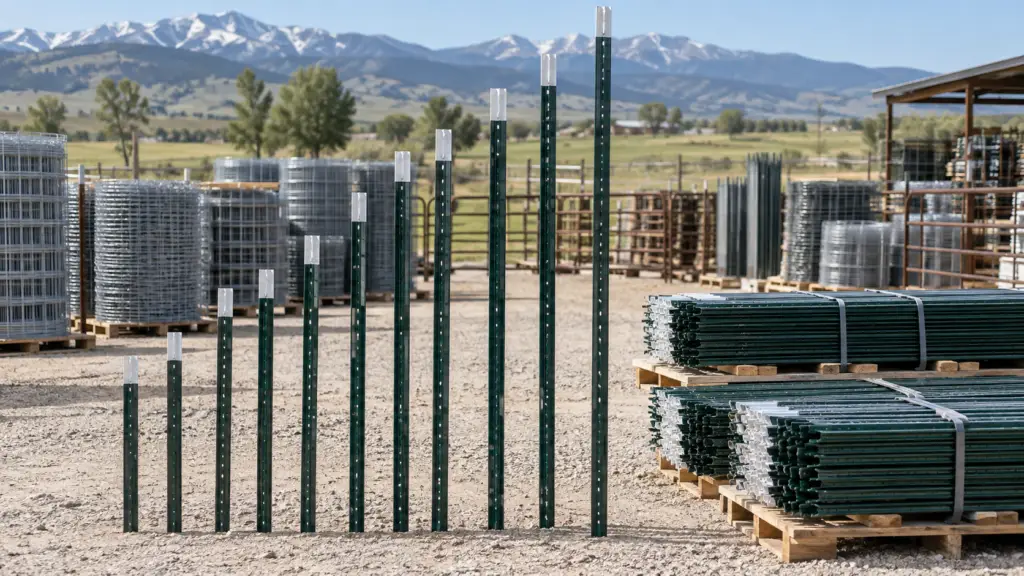
PLAN THE COMPLETE FENCE
Plan your bulk order
T-post lengths and weights are two of the most important specifications to confirm before ordering steel fence posts. Length determines how much post can remain above grade after installation, while nominal weight helps buyers compare lighter and heavier T-post options for different fencing applications. Nominal weight also indicates the amount of steel per foot of post; compare the stated specification with the requirements of your fence design.
There is no single T-post size that fits every project. Fence height, soil, terrain, livestock pressure, post spacing, wire type, corners, gates, and local installation conditions should all be reviewed together. For bulk orders, provide the desired length, nominal weight, quantity, finish, fence type, and delivery ZIP code so available options can be compared accurately.
T-post lengths and weights are two of the most important specifications to confirm before ordering steel fence posts. Length determines how much post can remain above grade after installation, while nominal weight helps buyers compare lighter and heavier T-post options for different fencing applications. Length affects how much post can remain above grade after installation, while nominal weight helps indicate the amount of steel in the post and the level of rigidity available for the fence line.
There is no single T-post size that fits every project. Fence height, soil, terrain, livestock pressure, post spacing, wire type, corners, gates, and local installation conditions should all be reviewed together. For bulk orders, provide the desired length, nominal weight, quantity, finish, fence type, and delivery ZIP code so available options can be compared accurately.
T-Post Length and Weight Options
Common T-Post Lengths
Steel T-posts are available in multiple lengths for different fence heights and installation depths. Select length according to the finished fence height, required embedment, terrain, and fence design rather than choosing by height alone.
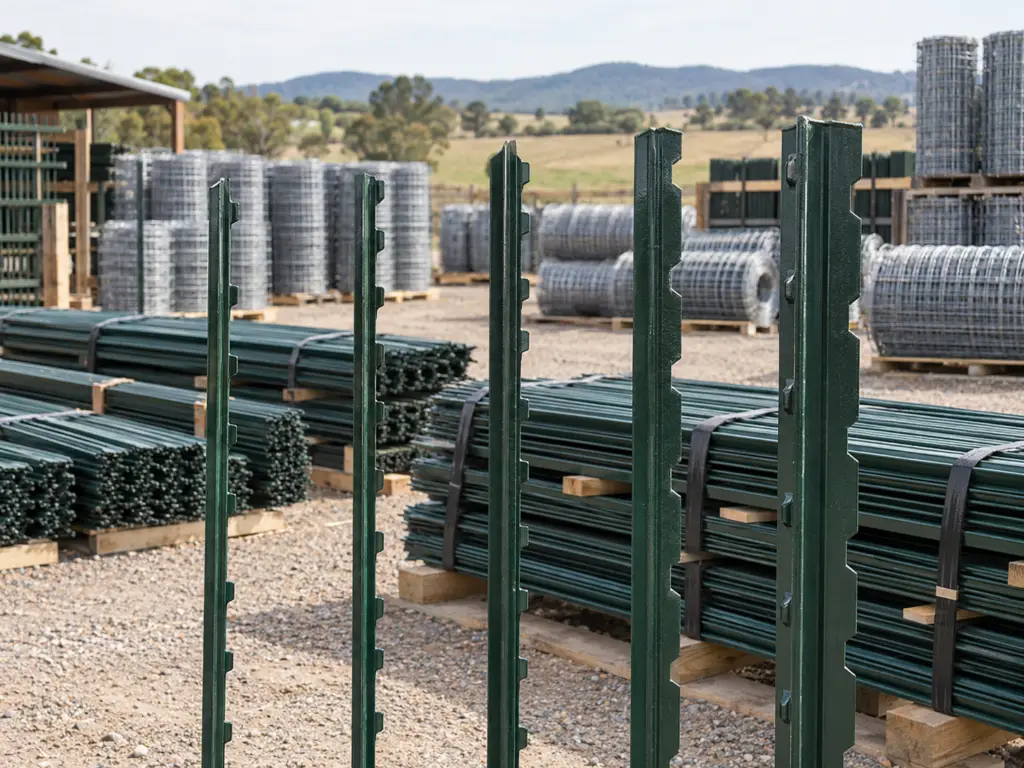
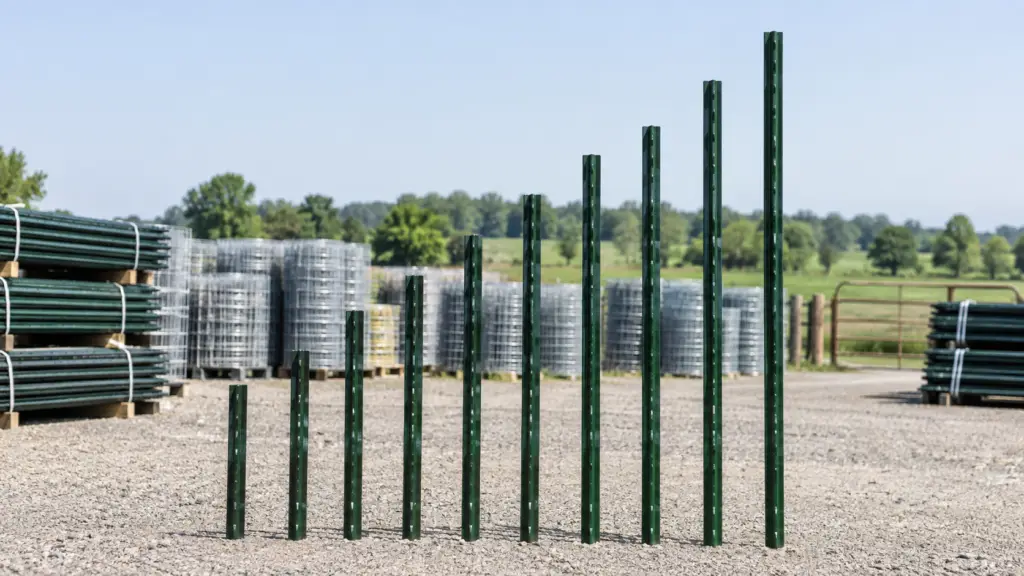
Nominal T-Post Weights
Nominal weight per foot is used to distinguish lighter and heavier T-post options. Heavier posts may be considered for demanding fence lines, higher livestock pressure, or projects where additional rigidity is preferred.
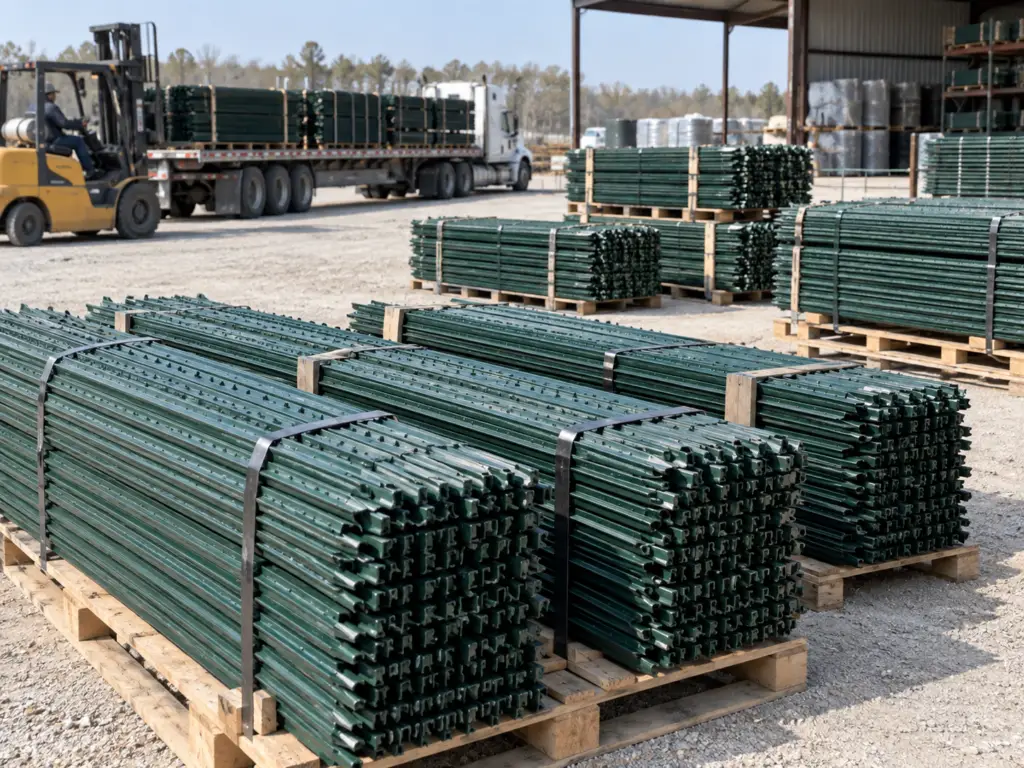
Bulk Size & Weight Orders
Order T-posts in project-scale quantities by required length, nominal weight, finish, and quantity. Packaging, total shipment weight, freight method, and delivery requirements are reviewed around the final specification mix.
How T-Post Length AND Weight Affect Fence Planning
Length and nominal weight influence how a T-post fits into the complete fence system. The correct combination should support the planned fence height, embedment, spacing, wire load, terrain, and expected use of the fence line.
- Length affects finished fence height and ground embedment
- Nominal weight helps distinguish lighter and heavier post options
- Spacing and wire type influence line-post demands
- Terrain and soil conditions can affect installation choices
- Farm, ranch, pasture, and property fencing applications
- Painted and galvanized T-post options
- Bulk ordering by specification and quantity
- Freight planning based on total order weight and destination
Projects That Depend on Correct T-Post Sizing
Pasture & Livestock Fencing
Fence height, livestock pressure, wire type, and spacing can influence the T-post length and nominal weight selected for pasture and containment projects.
Farm & Field Boundaries
Long agricultural fence runs benefit from consistent post specifications that match the planned wire system, spacing, and installation conditions.
Acreage & Property Fencing
Property boundaries, cross-fencing, and large-acreage projects may require different post lengths or weights depending on terrain and fence height.
Contractor Installations
Contractors can standardize T-post length and weight by project phase, fence type, and installation requirements to simplify purchasing and field work.
Dealer & Supply Replenishment
Dealers and repeat buyers can order commonly requested T-post specifications in bulk when length, weight, finish, and packaging are clearly defined.
Commercial & Utility Projects
Where T-posts are appropriate, project specifications should define the required post size, finish, spacing, wire system, and delivery quantities.
T-Post Lengths, Weights and Selection Factors
Choosing T-Post Length
Select length by considering finished fence height, required embedment, soil conditions, terrain, and fence design. A taller fence or deeper embedment requirement may call for a longer post.
Understanding Nominal Weight
Nominal weight per foot is a practical way to compare T-posts of similar length. Heavier posts generally contain more steel and may provide greater rigidity for demanding fence lines.
Fence Height & Embedment
The amount of post above and below grade should be planned together. Final fence height alone does not determine post length; embedment and ground conditions also matter.
Post Spacing
Closer or wider spacing can change how loads are distributed across the fence line. Spacing should be planned around wire type, terrain, livestock pressure, and the overall fence design.
Soil & Terrain Conditions
Rocky ground, soft soil, slopes, drainage conditions, and elevation changes can influence installation depth, spacing, and the post specification selected for the project.
Painted vs. Galvanized
Length and weight can be combined with painted or galvanized finishes. Finish selection should be based on the expected environment, corrosion exposure, and project requirements.
Wire System Compatibility
Barbed wire, woven wire, field fence, high-tensile systems, and electric fencing can place different demands on line posts, clips, insulators, and spacing.
Bulk Specification Planning
For large orders, organize post length, nominal weight, finish, quantity, wire type, hardware, delivery location, and unloading requirements together before requesting pricing.
Related T-Post Products & Materials
Painted T-Posts
Painted steel T-posts in multiple lengths and nominal weights for general agricultural and property fencing.
View guide →Galvanized T-Posts
Galvanized steel T-posts for projects where additional corrosion resistance is a priority.
View guide →T-Post Clips & Fasteners
Compatible clips and attachment hardware for securing wire fencing to steel T-posts.
View guide →Post Caps & Insulators
Caps and electric-fence insulators for compatible T-post fence systems.
View guide →Wire Fencing
Barbed wire, woven wire, field fence, and high-tensile wire for complete agricultural fence systems.
View guide →Gates, Brace Posts & Hardware
Farm gates, corner and brace posts, tensioning components, and accessories for complete fence projects.
View guide →Bulk T-Post Specification, Freight & Delivery Planning
Different T-post lengths and weights can significantly affect total shipment weight, packaging, freight method, and unloading needs. Provide your requested specifications and delivery ZIP code early so product selection and logistics can be reviewed together.
Specification-Based Pricing
Pricing is prepared from post length, nominal weight, finish, quantity, companion materials, and delivery requirements.
Length & Weight Review
Confirm requested dimensions and nominal weights before finalizing the order, including acceptable alternatives where flexibility is possible.
Freight Coordination
Shipment planning depends on total order weight, bundle configuration, destination, access, and unloading requirements.
Complete Fence Planning
Add wire, clips, gates, brace posts, insulators, caps, and hardware so the main fence components can be reviewed with the T-post order.
QUESTIONS, ANSWERED
T-Post Lengths and Weights FAQs
What T-post length should I use?
The right length depends on finished fence height, required embedment, soil conditions, terrain, and fence design. Share those details when requesting pricing if you need to compare available options.
What does nominal T-post weight mean?
Nominal weight is commonly expressed as weight per foot and helps distinguish lighter and heavier T-post options. It is one factor to consider alongside length, spacing, wire type, and project conditions.
Are heavier T-posts always better?
Not necessarily. Heavier posts may provide additional rigidity, but the appropriate weight depends on the fence design, livestock pressure, terrain, spacing, wire system, and project requirements.
Does a taller fence always require a longer T-post?
Usually the finished fence height affects post length, but embedment, terrain, soil, and project design must also be considered. The above-ground height should not be evaluated by itself.
Can I order multiple T-post lengths or weights in one bulk order?
Yes, mixed specifications may be possible depending on availability and order requirements. List each desired length, nominal weight, finish, and quantity separately when requesting pricing.
How do T-post length and weight affect freight?
Longer or heavier posts can increase total shipment weight and influence packaging, freight method, unloading requirements, and delivered cost. Delivery ZIP code should be included with the quote request.
Are length and weight options available in painted and galvanized finishes?
Many specifications can be offered in painted or galvanized finishes, but exact combinations depend on product availability. Confirm the required finish with the requested size and quantity.
How does post spacing affect T-post selection?
Spacing influences how loads are distributed along the fence line. Wire type, terrain, livestock pressure, fence height, and project design should all be considered together.
How do I estimate the number of T-posts needed?
Start with total fence footage and planned line-post spacing, then account for corners, gates, end assemblies, terrain changes, and reserve material. Final quantities should follow the project design.
What should I include in a T-post size and weight quote request?
Include desired length, nominal weight, finish, estimated quantity, fence type, wire materials, delivery ZIP code, site access, and any acceptable alternative specifications.
Request T-Post Length & Weight Pricing
Send your required T-post lengths, nominal weights, finish, estimated quantities, fence type, companion materials, and delivery ZIP code. We’ll review available specifications and prepare project-based pricing.